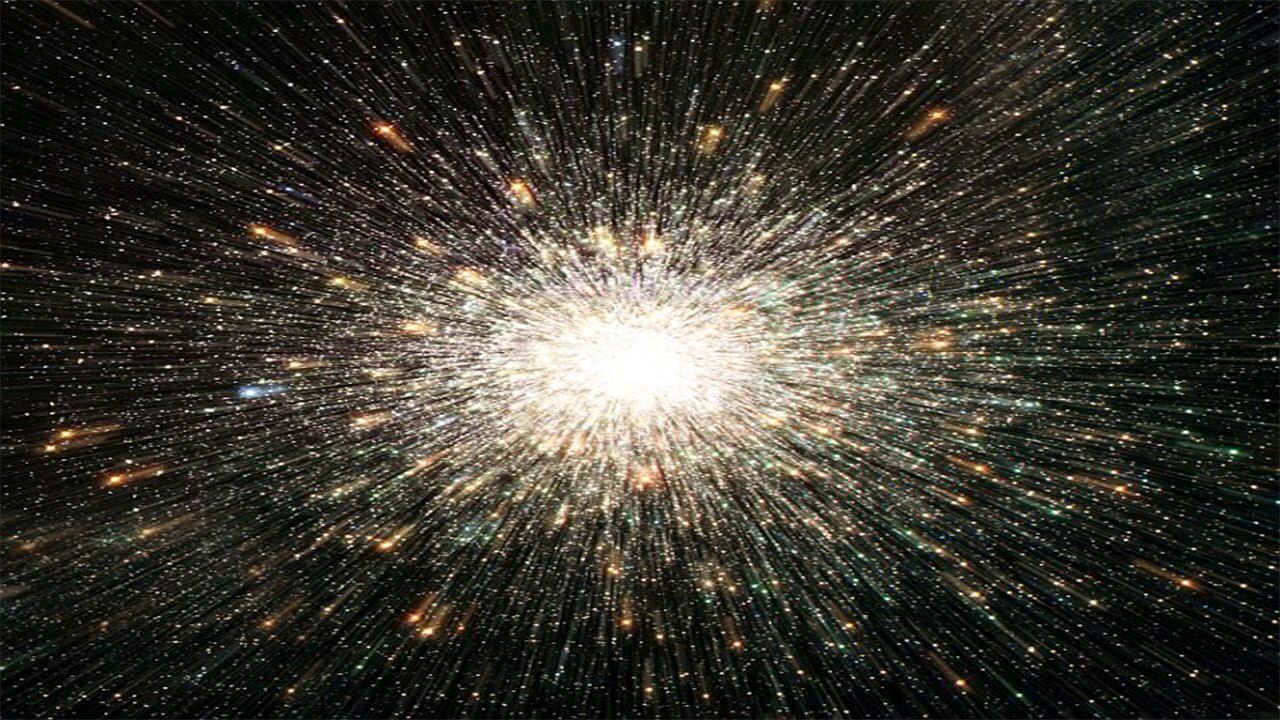
HOW REALISTIC IS THE SCIENTIFIC BIG BANG THEORY?
In the past, such questions and ideas were usually based on people's imagination and remained just ideas because they were not based on scientific data. Now we have the Big Bang, which we call the best theory, and it is the best theory proposed to date. This theory is based on observational evidence and also reveals the mathematics of how the universe behaves on a large scale. Astronomers observe the universe's past and try to calculate its future and its beginning. The only thing that allows us to understand this is the fact that light travels at a finite speed. When we observe a galaxy 1 billion light-years away through a telescope, we see it as it was 1 billion years ago. The second reason is the universality of the laws of physics. We know physics from Earth, and this physics can be applied to the universe as a whole.
When we combine the observations made with space telescopes, the latest marvel of technology, with the laws of physics, we arrive at the Big Bang Theory. According to this theory, the universe began 13.8 billion years ago from a point of infinite smallness (much smaller than subatomic particles), infinite density, and infinite temperature. From this tiny beginning, the universe expanded continuously and formed the stars and galaxies we see today. Of course, you may question what and where this infinite smallness was. If you are looking for a starting point as a point of condensed matter, you may question what that point was inside. Was it another universe?
For many, the Big Bang has an appeal beyond its scientific aspects. It is a singular and dramatic moment of creation that resonates with mythological and religious texts, and therefore people who are not scientists also find the Big Bang compatible with their own perspectives. On the other hand, in the early days, the theory was rejected by a segment of the scientific community because they believed the universe was static and unchanging. British astronomer and mathematician Sir Arthur Eddington (1882-1944) wrote on this subject, "The idea of a beginning is disturbing to me... I do not believe that the order of the universe began with an explosion." In fact, another British scientist who named the theory the 'Big Bang', Sir Fred Hoyle (1915 – 2001), did not agree with this theory. Eddington and Hoyle were extremely familiar with Einstein's theory of general relativity. Eddington was the first person to translate General Relativity into English and took on the task of introducing the theory to the English-speaking scientific community. In its earliest form, the Big Bang Theory was proposed in the 1920s as a solution to Einstein's equations, but the Big Bang was not the only solution. The same equations also allowed for a completely static universe. Therefore, scientists wanted to obtain observational evidence before deciding on anything.
The first step that strengthened the idea that the Big Bang could be correct was the discovery that the universe was expanding. This important discovery was made in 1929 by Edwin Hubble . Hubble examined the distances obtained from observations of individual stars in galaxies and the speeds at which they were moving away from us, obtained from spectral measurements, in the data of two galaxies beyond the Milky Way. Surprisingly, the farther a galaxy was from us, the faster it was moving away. There could only be one explanation for this: the entire universe was expanding. You can think of it like spots on an inflated balloon. As the balloon inflates, imagine the spots moving away from each other like galaxies. The incoming signals told us that the universe was expanding. If it was expanding, there must have been a moment when it was closed.
However, although an expanding universe is consistent with the Big Bang theory, it does not necessarily depend on it. It may sound strange, but a universe that expands at a constant rate, infinite and unchanging, is also possible. In this case, a small amount of matter must be produced to maintain the average density of the universe during its expansion: a few hundred atoms per galaxy per year.
This 'steady-state hypothesis', supported by Hoyle and others, was the Big Bang's biggest rival until the mid-20th century.
However, in the end, the Big Bang prevailed and the steady-state hypothesis collapsed. In light of all the observational evidence that has come to light, we know that Hoyle's view that the universe has always been the same is incorrect. On the contrary, the universe has evolved over time as predicted by the Big Bang. For example, thanks to images of distant galaxies taken by Hubble, we know that early galaxies differed in size and shape from modern galaxies. Although this is more recent evidence, the real nail in the coffin for the steady-state hypothesis was the discovery of cosmic microwave background radiation (CMB) in the 1960s.
The CMB is sometimes considered the 'echo' of the Big Bang. If such an echo truly existed, the Big Bang would be proven. However, the reality is not that simple. First, when Fred Hoyle coined the term Big Bang, he did not imagine an actual explosion or sound; the word "bang" was a metaphor used to describe the universe suddenly expanding from an extremely dense state. Therefore, there is no question of hearing an explosion or its echo. So, could a really powerful telescope actually see 13.8 billion years ago, i.e., the Big Bang?
Unfortunately, this is not possible. When the universe was much younger and smaller, it was extremely hot and filled with a bright plasma similar to the plasma in the Sun during its early stages. A telescope could never see beyond such a thing because plasma scatters light in the same way a cloud scatters sunlight. Just as we cannot see beyond a layer of clouds, we cannot see beyond the 'last scattering surface' corresponding to 380,000 years after the Big Bang. We see the light scattered from this cloudy surface and spread equally in all directions today as cosmic microwave background radiation.
The CMB is one of those phenomena whose existence was theoretically predicted before it was observed. Robert Dicke of Princeton University pointed out that such a thing would be the most important thing to confirm the Big Bang Theory and disprove the steady-state hypothesis. In 1965, while working on a device to detect this radiation, Arno Penzias and Robert Wilson from Bell Telephone Laboratories noticed a problem in their experiment. Dicke realized that Penzias and Wilson had accidentally discovered the CMB, thus providing one of the strongest pieces of evidence for the Big Bang.
Combining Hubble images of distant galaxies with satellite measurements of the Cosmic Microwave Background Radiation meant that the entire history of the universe, up to the age of 380,000 years, or roughly the Big Bang, could be examined. So what happened before that point? Although we cannot observe anything beyond the last scattering surface, astronomers can make predictions by combining CMB observations with physical theories and computer models. When they did so, the results did not turn out exactly as the theorists had expected.
The problem here is that the CMB is observed to be uniformly distributed across different regions of the sky. Scientists have not reached a consensus that the universe expanded at the rate we observe today at every point in space. Instead, they proposed that the universe expanded at an extremely rapid rate during a process called 'cosmic inflation' over a short period of time.
Cosmologists calculated the time required for this inflation, but it was impossible to express this in everyday time frames. The best way to comprehend this inflation rate was to imagine the universe expanding faster than light from subatomic particle size to the size of a golf ball in a time equivalent to one trillionth of a trillionth of a second.
Einstein's supporters may immediately object to this idea, but it does not contradict Einstein's predictions because, according to Einstein, this limit is related to the displacement of objects measured relative to each other. In this case, it was the fabric of space-time itself that expanded faster than light, which is entirely normal within the framework of relativity.
At the end of this inflationary period, the universe settled into a more tranquil rate of expansion, creating conditions in which matter could emerge. As expansion continued, the extremely hot universe cooled enough for particles to combine and form atoms, leading to the emergence of stars and galaxies.
This provides us with an explanation of the birth of the universe in terms of the Big Bang, but the Big Bang Theory goes beyond this, addressing the historical development and evolution of the universe from yesterday to today. When this large scale is considered, observational astronomers have another surprise for theorists.
In the original Big Bang Theory, the rate of expansion of the universe is not constant. This expansion slows down over time as gravity overpowers the matter in the universe. It is very easy to approach this in a different way, measure how fast the expansion is slowing down, and determine the total mass of the universe. In the 1990s, a research team plotted the distances of Type Ia supernovae against the expansion rate of the universe on a graph.
The result was something no one expected. Apparently, the expansion rate of the universe was not decreasing, but increasing. This was the biggest discovery in cosmology in recent years and earned the team that conducted the research the Nobel Prize . This means that something is counteracting gravity on a large scale. Today, no one knows what this 'thing' is, but it has been aptly named dark energy due to its mysterious nature.
Dark energy is not something that contradicts Einstein's theory of general relativity. It simply means that the solutions applied to Einstein's equations are not entirely correct. Ironically, Einstein may have pointed to the correct solution to his own equations before Edwin Hubble discovered the expansion of the universe. Einstein's own solution was a static, non-expanding universe, and to reach this conclusion, he added a constant called the 'cosmological constant' to the equations. This prediction was discarded after Hubble's discovery, and Einstein described it as his "biggest mistake." However, choosing an appropriate cosmological constant could produce the effects of dark energy and perhaps prove Einstein right.
On the other hand, the term "explosion" can be misleading and misleading. In an explosion, fragments scatter outward from the center within an existing space, and you see each point moving away from you at an equal distance. However, this is not the case with the Big Bang. It appears more like the expansion of space itself. All distances in the universe expand at the same rate. Two galaxies x distance apart from each other move away from each other at the same rate, while galaxies 2x distance apart move away from each other at the same rate multiplied by two.
When it comes to science, we can comfortably say that there is still a long way to go. Considering the incompatibility of quantum mechanics with this Big Bang theory, we do not yet have sufficient data to be certain.
Levent Aslan.

Bu kitabın imzalı bir fiziki kopyasına sahip olmak için altta bulunan banka bilgilerine ödeme yaptıktan sonra ödeme bildiriminde bulunabilirsiniz















Yorum Yap